How Long Will a 100Ah Battery Last?
A 100Ah battery is the workhorse of backup power systems, off-grid setups, and DIY energy projects. But the question everyone asks — “how long will it last?” — doesn’t have a simple answer.
Runtime depends on what you’re powering, what type of battery you have, and how you’re delivering the energy. This guide breaks down the real factors, so you can estimate runtime accurately.
What Does 100Ah Actually Mean?
The Ah (amp-hour) rating tells you how much current a battery can deliver over time. A 100Ah battery can theoretically supply 100 amps for 1 hour, 10 amps for 10 hours, or 1 amp for 100 hours.
But here’s the thing: your devices don’t draw amps — they draw watts. So we need to convert.
From Amp-Hours to Watt-Hours
Battery energy is calculated as:
Energy (Wh) = Voltage (V) × Capacity (Ah)For a 12V system:
- LiFePO4 (12.8V nominal): 100Ah ≈ 1,280 Wh
- Lead-acid/AGM (12.0V nominal): 100Ah = 1,200 Wh
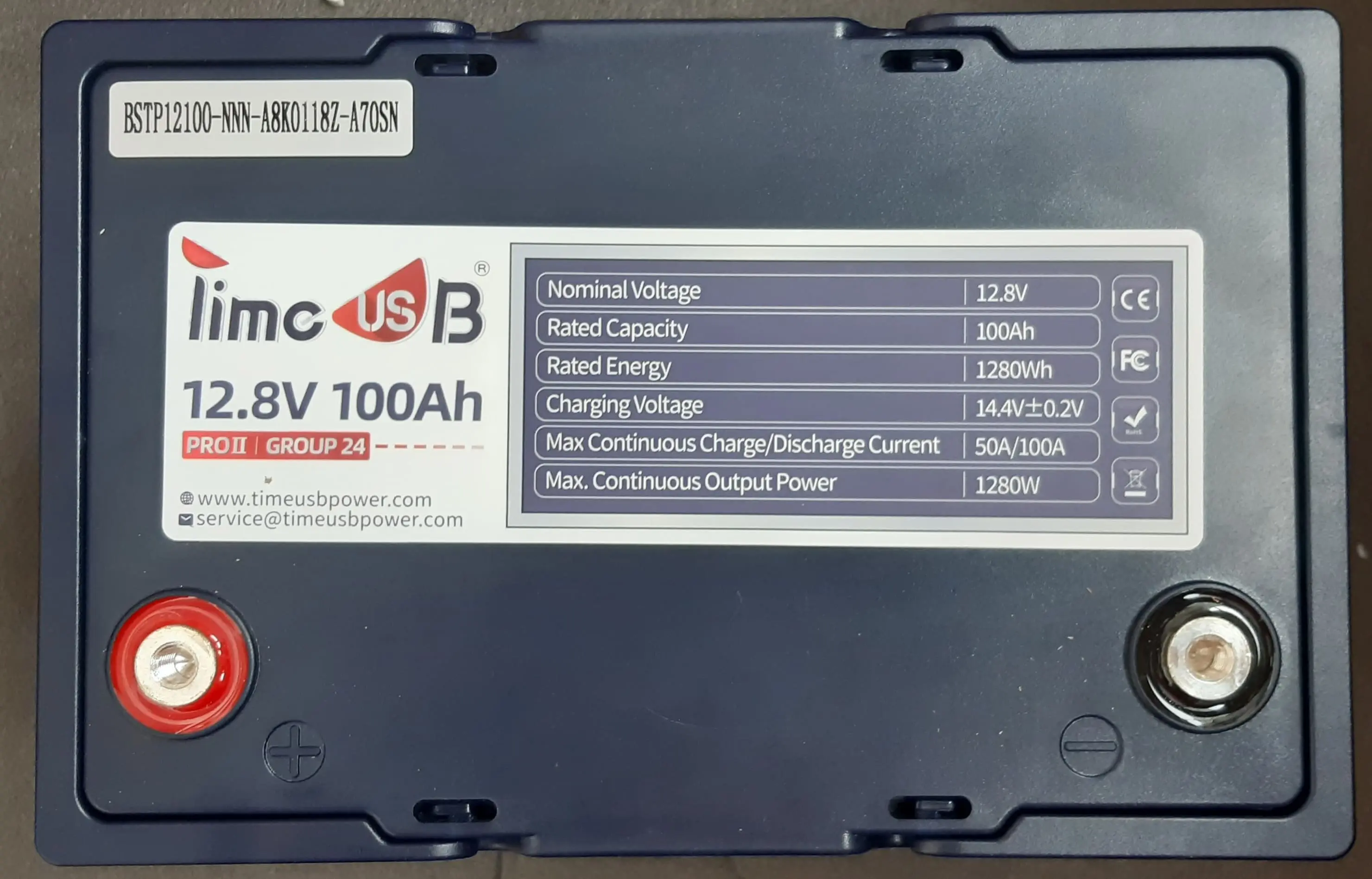
Most estimates round to 1,200 Wh, but LiFePO4 actually delivers a bit more thanks to its higher voltage and flatter discharge curve.
You Can’t Use 100% of That Capacity
Batteries shouldn’t be drained completely — doing so kills their lifespan. The safe limit is called Depth of Discharge (DoD), and it varies by chemistry:
| Battery type | Recommended DoD | Usable energy from 100Ah |
|---|---|---|
| LiFePO4 | ~90% | ~1,100–1,150 Wh |
| AGM | ~50% | ~600 Wh |
| Flooded lead-acid | ~50% | ~600 Wh |
This is huge. Two batteries with identical “100Ah” labels can have nearly double the difference in usable runtime.
Runtime Estimates by Load
Here’s what you can realistically expect from a 12.8V 100Ah LiFePO4 battery under steady, continuous load:
| Load | Runtime (DC) | Runtime (AC via inverter) |
|---|---|---|
| 50W | ~20–22 hours | ~14–16 hours |
| 100W | ~10–11 hours | ~7–8 hours |
| 200W | ~5–5.5 hours | ~3.5–4 hours |
| 500W | ~2–2.2 hours | ~1–1.5 hours |
DC = device powered directly from battery. AC = going through an inverter, which adds losses.
For your specific setup, use the calculator:
1. What are you powering?
2. Power Source
Why Inverters Cost You More Than You’d Think
Two things happen when you use an inverter:
Conversion losses — most consumer inverters run at 80–90% efficiency. That missing 10–20% turns into heat, not power for your device.
Idle draw — inverters consume 5–15W just being on, even with nothing plugged in. For small loads like routers or LED lights, this idle draw can be a significant chunk of your total consumption.
Bottom line: if you can power something directly from DC, you’ll get noticeably longer runtime.
Other Factors That Matter
Temperature — Cold weather reduces capacity. Expect ~10% loss near freezing, up to 20% in colder conditions.
Load type — Motors, compressors, and pumps have startup surges that pull more current than their rated wattage. A fridge rated at 60W might spike to 200W when the compressor kicks in.
Battery age — Capacity degrades over time through use and just sitting around. Your 100Ah battery won’t stay 100Ah forever.
The Simple Formula
If you want to calculate runtime yourself:
Runtime (hours) = Usable Energy (Wh) ÷ Actual Load (W)

Where:
  Usable Energy = Battery Wh × DoD
  Actual Load = Device watts ÷ Efficiency
Example: Running a 100W AC device from a 12.8V 100Ah LiFePO4 through an inverter:
- Battery energy: 1,280 Wh
- Usable (90% DoD): 1,150 Wh
- Inverter efficiency: 85%
- Runtime: 1,150 ÷ (100 ÷ 0.85) ≈ 9–10 hours
The Key Point
Battery runtime isn’t about amp-hours — it’s about watts and usable energy. A 100Ah LiFePO4 and a 100Ah lead-acid battery will give you vastly different results, and adding an inverter changes everything again.
For specific scenarios like running a fridge, TV, or 200W load, check out the detailed guides linked below.
How long will a 100Ah battery run an appliance that requires 200W?
How Long Will a 12V Fridge Run on a 100Ah Battery?
Last updated: December 2025