
LiFePO4 Charging: Do You Need a Special Charger?
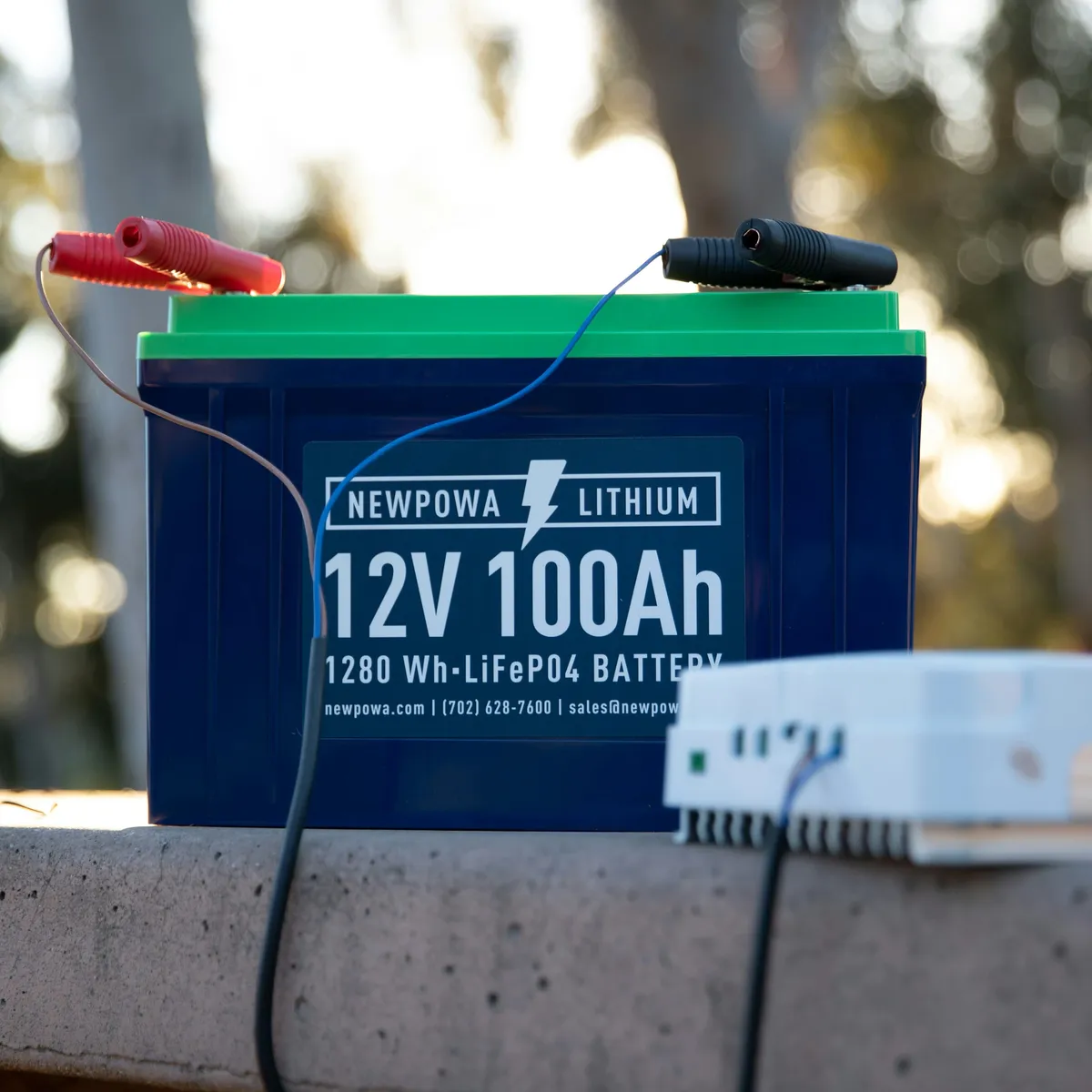
You’ve got a new LiFePO4 battery and an old charger sitting in the garage. The obvious question: will it work?
Short answer: probably not safely. Here’s why charger compatibility matters more than you might think.
The Voltage Problem
LiFePO4 batteries need precise charging voltage - 14.4 to 14.6V for a 12V battery, and not a volt more. That’s 3.65V per cell, which is the chemistry’s hard limit.
Lead-acid chargers often push 15V or higher during “equalization” or “desulfation” stages. These modes are designed to restore lead-acid batteries - but they’ll damage LiFePO4 cells or trigger your BMS to shut down repeatedly.
Regular lithium-ion (Li-ion) chargers are even worse. They charge to 4.2V per cell, which would push a 12V LiFePO4 pack to 16.8V. That’s a recipe for permanent damage.
Key voltages for a 12V battery: LiFePO4 needs 14.4-14.6V (3.65V/cell). Lead-acid chargers can push 15V+. Li-ion chargers push 16.8V (4.2V/cell). Only LiFePO4-specific voltage is safe.
Can You Use a Lead-Acid Charger?
Sometimes - but it’s risky.
A basic lead-acid charger that tops out at 14.4-14.6V and has no automatic maintenance modes can technically work. The problem is most lead-acid chargers - especially “smart” ones - have features designed specifically for lead-acid chemistry that are harmful to LiFePO4:
Equalization mode pulses 15-16V to prevent sulfation. LiFePO4 doesn’t sulfate, but it will get damaged by those voltage spikes.
Float charging keeps lead-acid batteries at 13.5-13.8V indefinitely. LiFePO4 doesn’t need or want continuous float - once it’s full, the charger should stop.
“Return to bulk” triggers are set for lead-acid voltage thresholds. Since LiFePO4 rests at a higher voltage (13.3V vs 12.7V), the charger might never restart or behave unpredictably.
If you must use a lead-acid charger, pick the simplest one you can find - no smart features, no automatic modes. Watch the voltage with a multimeter. Disconnect manually when it hits 14.4V. And never leave it connected overnight.
But honestly? A proper LiFePO4 charger costs $30-50. Your battery cost several hundred. The math is obvious.
What About “Lithium” Chargers?
Check the fine print. “Lithium” usually means Li-ion (4.2V/cell), not LiFePO4 (3.65V/cell). That’s 16.8V vs 14.6V for a 12V battery - a big difference.
Universal chargers with a LiFePO4 mode work great. Many modern smart chargers support multiple chemistries - just select the right profile before connecting. This is a practical choice if you have different battery types.
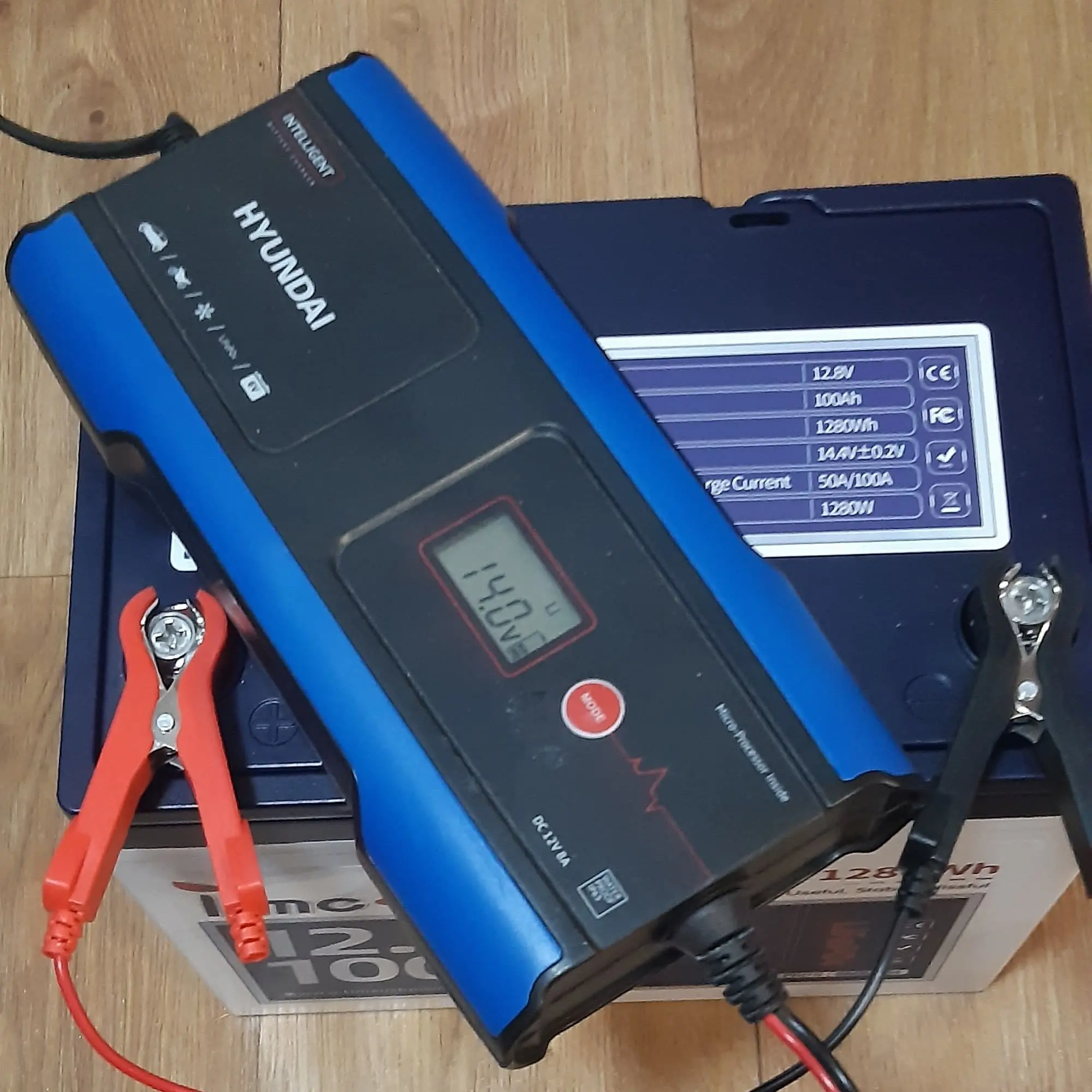
The Hyundai HY 810, for instance, has a dedicated LiFePO4 mode. The NOCO Genius series offers something similar - 14.6V charging with proper CC/CV staging, no float afterward, and gradual current tapering that gives the BMS time to balance cells.
That’s exactly what LiFePO4 needs: correct voltage, proper staging, and no harmful maintenance modes.
Li-ion mode on a LiFePO4 battery is a different story. Your BMS will protect the cells by disconnecting when they hit 3.65V, so nothing will explode. But the charger keeps pushing higher voltage, BMS cuts it off, charger tries again - you end up with constant on/off cycling. The battery won’t fully charge, and both the BMS and charger are stressed unnecessarily.
It “works” in the sense that nothing gets damaged. But it’s the BMS constantly saving the situation, not proper charging.
Look for chargers explicitly marked “LiFePO4” or “LFP,” or universal chargers where you can select this mode.
The BMS Will Protect Me, Right?
Your Battery Management System will try. It monitors cell voltages and disconnects charging if anything goes over the limit (usually 3.65-3.7V per cell).
But here’s the thing: the BMS is a safety net, not a charging strategy. Hitting that cutoff repeatedly stresses the system. Some chargers don’t handle the sudden disconnect gracefully and will keep retrying, cycling your BMS on and off.
A proper charger stops at the right voltage before the BMS needs to intervene. That’s the difference between “technically works” and “works correctly.”
The BMS is a safety net, not a charging strategy. Relying on BMS cutoffs instead of a proper charger stresses both the battery management system and the charger unnecessarily.
Should You Charge to 100%?
Yes, and occasionally you should.
LiFePO4 handles full charges well - the chemistry is stable at 3.65V. Unlike regular Li-ion, sitting at 100% doesn’t cause rapid degradation.
For maximum lifespan, some people keep daily charging to 80-90%. But you’ll want to hit 100% periodically so the BMS can balance your cells - it can only do this when they’re near full charge.
For long-term storage (weeks or months), keep the battery at 50-60% instead.
One More Thing: Don’t Charge Below Freezing
This is important and often overlooked.
Charging at freezing temperatures causes lithium plating - lithium deposits form on the anode instead of being absorbed properly. This damage is permanent and reduces capacity with each cold charge.
Discharging in cold weather is fine (down to -4°F / -20°C for most batteries). But charging? Wait until the battery warms up, or use a battery with built-in heating. Many quality BMS units will block charging automatically below freezing - that’s a feature, not a malfunction.
Never charge a LiFePO4 battery below 0°C (32°F). Cold charging causes permanent lithium plating on the anode, reducing capacity with each charge cycle. Discharging in cold weather is fine.
Calculate Your LiFePO4 Runtime
Pick your LiFePO4 battery and device to see estimated runtime:
1. What are you powering?
2. Power Source
FAQ
Can I charge a LiFePO4 battery with a lead-acid charger?
Sometimes, if it’s a basic charger that tops out at 14.4-14.6V with no smart features. But most modern lead-acid chargers have equalization and float modes that can damage LiFePO4 cells. A dedicated LiFePO4 charger costs $30-50 and is the safer choice.
Will my BMS protect the battery from the wrong charger?
Your BMS will try — it disconnects charging when cell voltage exceeds the limit (3.65-3.7V per cell). But repeatedly hitting the BMS cutoff stresses the system and prevents full charging. The BMS is a safety net, not a substitute for a proper charger.
Should I charge my LiFePO4 battery to 100%?
Yes, and periodically you should. LiFePO4 chemistry is stable at full charge, unlike Li-ion. Charging to 100% lets the BMS balance cells. For maximum lifespan, some people keep daily charging at 80-90%. For long-term storage, keep at 50-60%.
Can I charge LiFePO4 in cold weather?
Never charge below 0°C (32°F). Cold charging causes permanent lithium plating on the anode. Discharging in cold weather is fine down to -20°C. Wait for the battery to warm up, or use one with built-in heating.
What’s the difference between “lithium” and “LiFePO4” chargers?
“Lithium” usually means Li-ion (4.2V per cell = 16.8V for a 12V pack). LiFePO4 needs 3.65V per cell (14.6V for a 12V pack). Using a Li-ion charger on LiFePO4 causes overvoltage. Look for chargers marked “LiFePO4” or “LFP,” or universal chargers with a selectable LiFePO4 mode.
Also Useful
Last updated: February 2026