Sodium-ion batteries: what they are, pros/cons, and where they beat LiFePO4
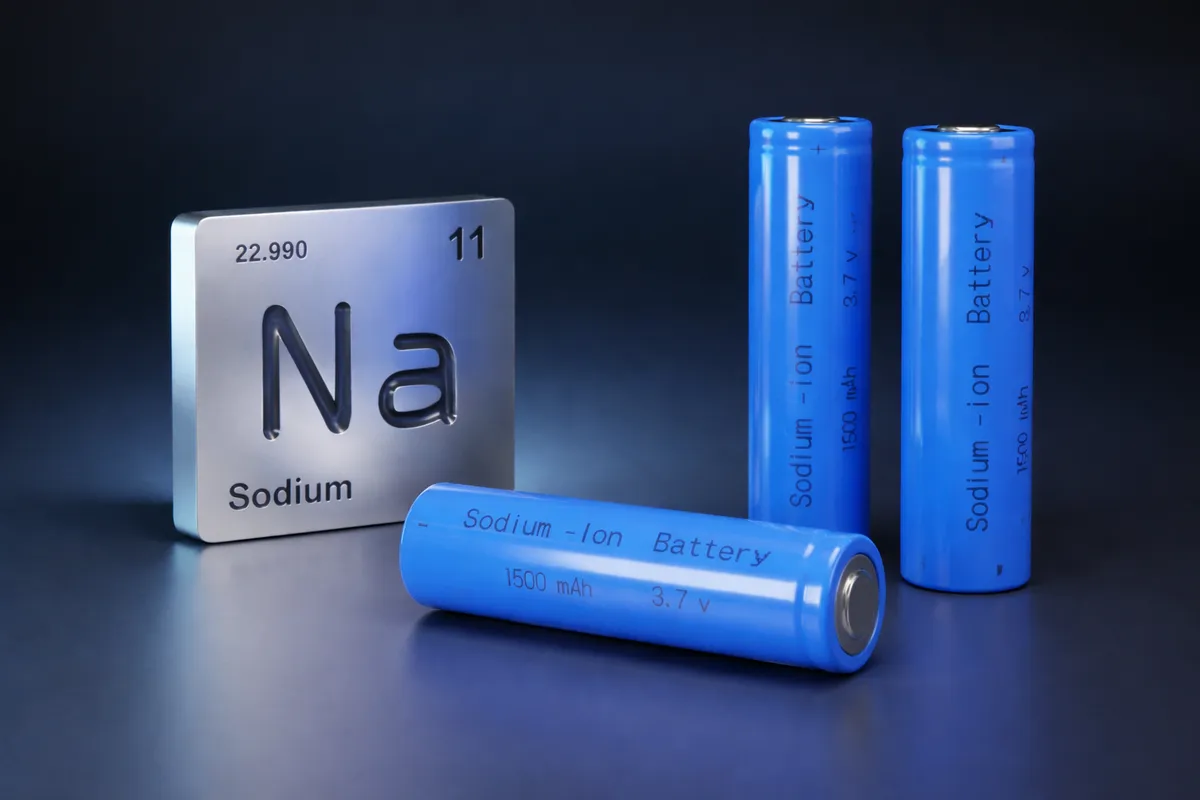
Na-ion isn’t “the next lithium” - it’s a different trade-off. Heavier packs, but better cold performance and less dependence on lithium/cobalt supply chains.
- Best for: garage backup, cold climates, grid storage - anywhere weight doesn’t matter
- The catch: heavier than LiFePO4 for the same capacity (120–175 Wh/kg vs 150–200 Wh/kg)
- Cost: slightly more than LiFePO4 right now (~$59 vs $52/kWh, Wood Mackenzie)
- Cold performance: ~90% capacity at -20°C (CATL data), vs ~60% for LFP
- Shipping: can ship at 0V (fully discharged) - lithium can’t do that safely
Related guides:
- Why isn’t Na-ion everywhere yet?
- Na-ion vs lithium: head-to-head
- Real-world data: lifespan, cold, cost
What’s actually different about sodium-ion?
Same basic idea as lithium-ion - ions move between electrodes when you charge and discharge. The difference is which ions: sodium instead of lithium.
Why does that matter?
Sodium is everywhere. 1,000× more abundant than lithium in Earth’s crust, 60,000× more in seawater. Less geographic concentration, less price volatility.
Different supply chain. Na-ion reduces dependence on lithium, cobalt, and nickel. But it’s not “no supply chain” - hard carbon anodes and cathode materials still need sourcing, and >95% of production capacity is in China.
Safer shipping. Many Na-ion designs can ship fully discharged (0V), which lithium cells can’t do safely.
The downside? Lower energy density (120–175 Wh/kg vs 150–300 Wh/kg for lithium). Your pack will usually be bigger and heavier for the same capacity.
When Na-ion makes sense
Na-ion is a good fit if you’re in a cold climate and the battery stays in one place - home backup, garage rack, stationary storage. It handles freezing temps better (90%+ capacity at -20°C, CATL), and some packs charge fast (0→80% in ~15 minutes). It also reduces your dependence on lithium and cobalt supply chains.
Stick with lithium if weight matters - phones, laptops, drones, long-range EVs. Li-ion has 10+ years of real-world data and way more product variety. Most Na-ion is still made in China with limited options.
Important: discharge temp ≠ charge temp. Most Li-ion can’t safely charge below 0°C. Na-ion can typically charge at -20°C or colder.
Na-ion vs lithium at a glance
| What matters | Na-ion | LiFePO4 | NMC/NCA |
|---|---|---|---|
| Cold weather | ~90% at -20°C | ~60% at -20°C | ~60% at -20°C |
| Weight/size | Usually heavier | Middle ground | Lightest |
| Cost (2025) | ~$59/kWh | ~$52/kWh | Higher |
| Product choices | Limited - mostly from China | Mature market | Mature market |
| Supply chain | Less Li/Co dependence | Needs lithium | Cobalt, nickel |
Bottom line: Na-ion wins when cold performance and supply chain matter more than weight.
Compare runtime yourself
Forget “sodium vs lithium” - compare usable watt-hours instead. A 100 Wh sodium pack and a 100 Wh lithium pack will run the same load for the same time.
Pick a sodium pack and compare it directly:
1. What are you powering?
2. Power Source
Buyer checklist
Shopping for a Na-ion power station or home backup? The chemistry label matters less than the specs. Check usable capacity (not just “rated”), operating temperature for both discharge and charge, and warranty terms - years, cycles, and what voids it. If you’re in a cold climate, make sure it can charge in winter without a heated space. And don’t ignore efficiency - inverter idle draw and DC output losses add up.
FAQ
Will sodium replace lithium?
No. They’ll coexist. Sodium for stationary storage and cold climates. Lithium for phones, laptops, and EVs where every gram matters.
Is Na-ion cheaper than lithium?
Almost. Na-ion is ~$59/kWh vs LFP at ~$52/kWh (cell-level, Wood Mackenzie). That’s only a 13% gap. Target: ~$40/kWh at scale (IRENA).
How long do Na-ion batteries last?
10–15 years calendar life, 4,000–6,000 cycles. Similar to LiFePO4.
Where are Na-ion batteries made?
Over 95% of announced capacity is in China - CATL and BYD lead production. Manufacturing outside China is growing but still limited.
Sources
- IRENA: Sodium-ion batteries technology brief (2025)
- Wood Mackenzie: Sodium-ion batteries enter energy storage market
- IEEE Spectrum: Sodium-ion batteries
- IDTechEx: Sodium-ion Batteries 2025-2035 report
- CATL: Naxtra battery specifications
Last updated: January 2026